Bouranton Dagger
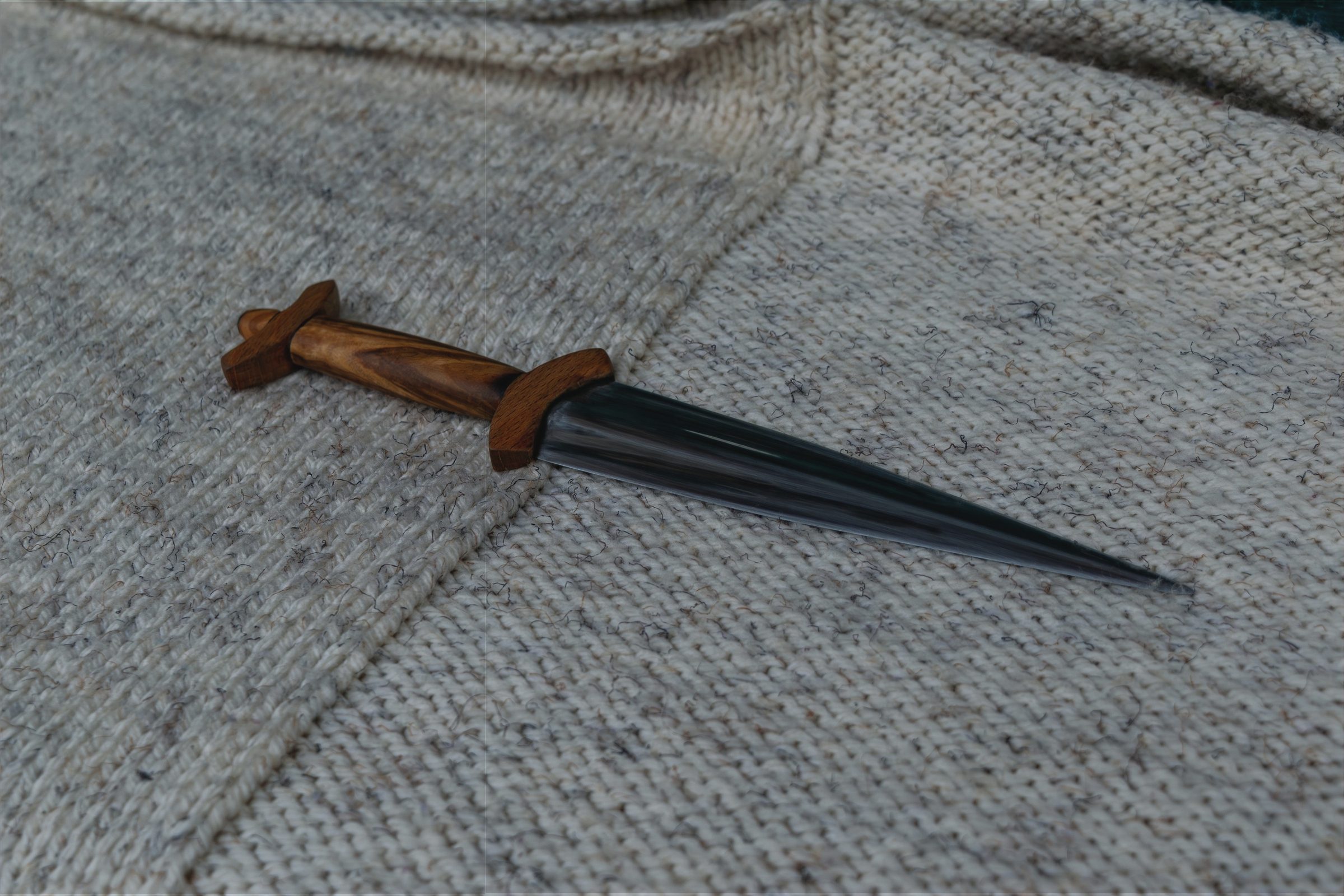
Miniature reproduction after Rapin (2000) – c. 400 BCE
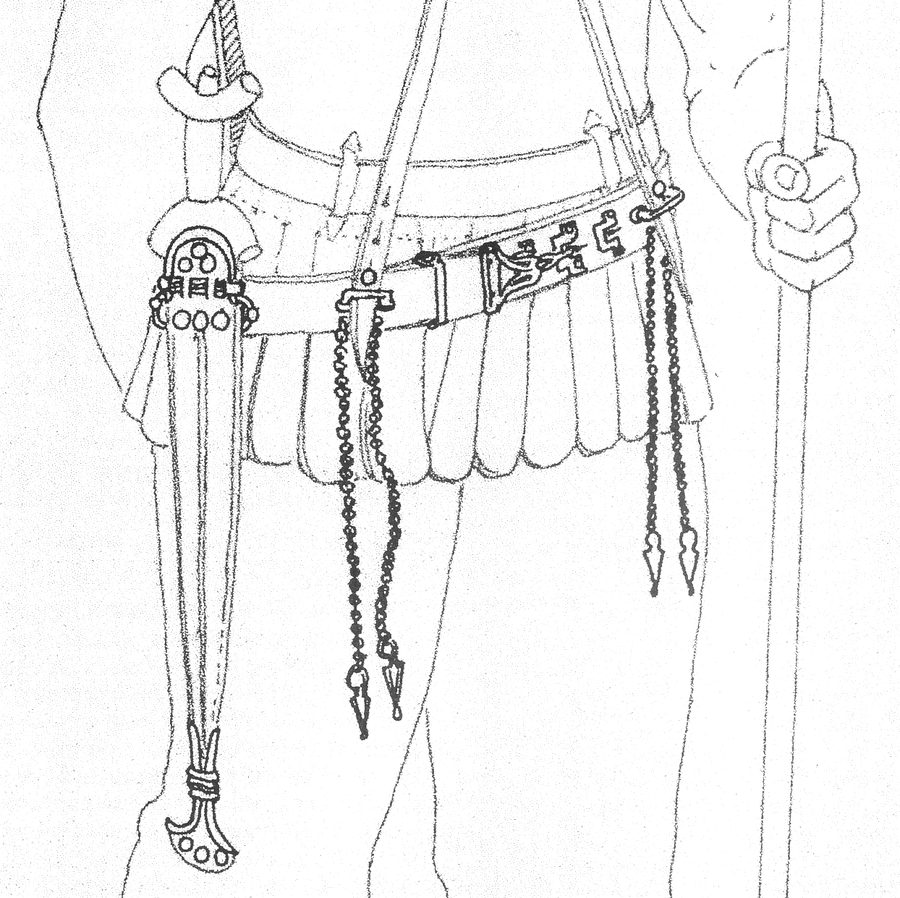
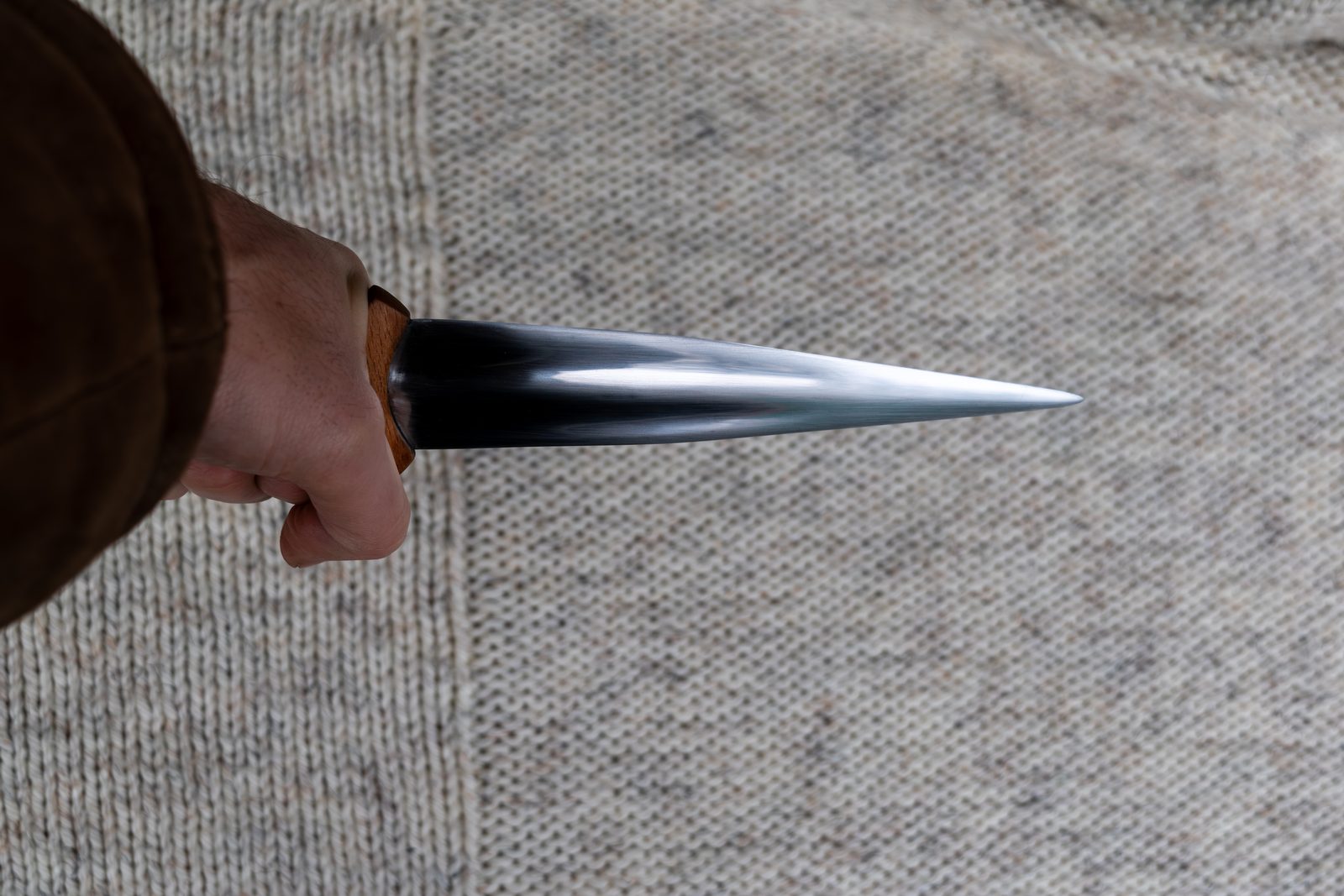
Miniature reproduction after A. Rapin (2000). Found at Bouranton (Aube, France) in a warrior's grave, this piece is unusual in carrying features of both the first and second Iron Ages. I hope one day to reproduce it at full scale, together with its scabbard and its remarkable belt and suspension system.
Carbon steel · beech · olive wood
Approach
Reproducing a blade from the fifth century BCE.
A miniature after a La Tène piece (Bouranton, 5th c. BCE).
I worked from André Rapin's study, a very thorough one, which proposes a reconstruction of the blade, the scabbard and its belt. For the moment I have confined myself to the blade.
According to the author it is a transitional object, showing characteristics of both the First and the Second Iron Age : a straight-sided triangular blade in its lower part, but fullers (the grooves running along the blade) still only faintly marked. The author reads this fine delineation of the fullers as the result of hollowing by removing material. I did not, however, need to remove any material to shape them.
The two-part structure was obtained by simple symmetrical fullering of a triangular blank with straight edges, over the first two thirds of the blade. Where the fullers were forged, the edges converge toward the point at a more obtuse angle than in the final third, which was left unfullered.
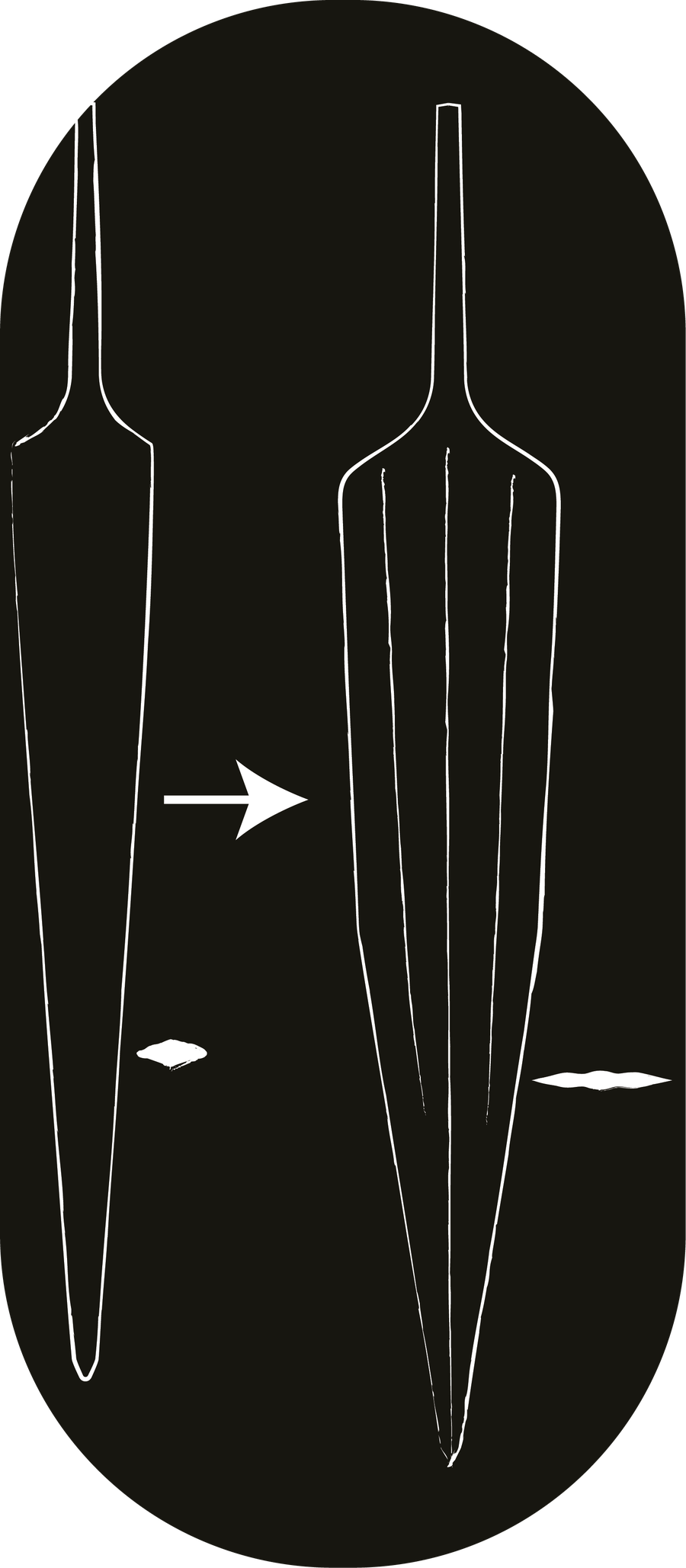
I did this with a « guillotine », but all manner of swages and stakes will give the same result, provided the fullers are forged between two identical convex forms : otherwise the work done on one face undoes what was achieved on the other, while drawing the blade out to no purpose.
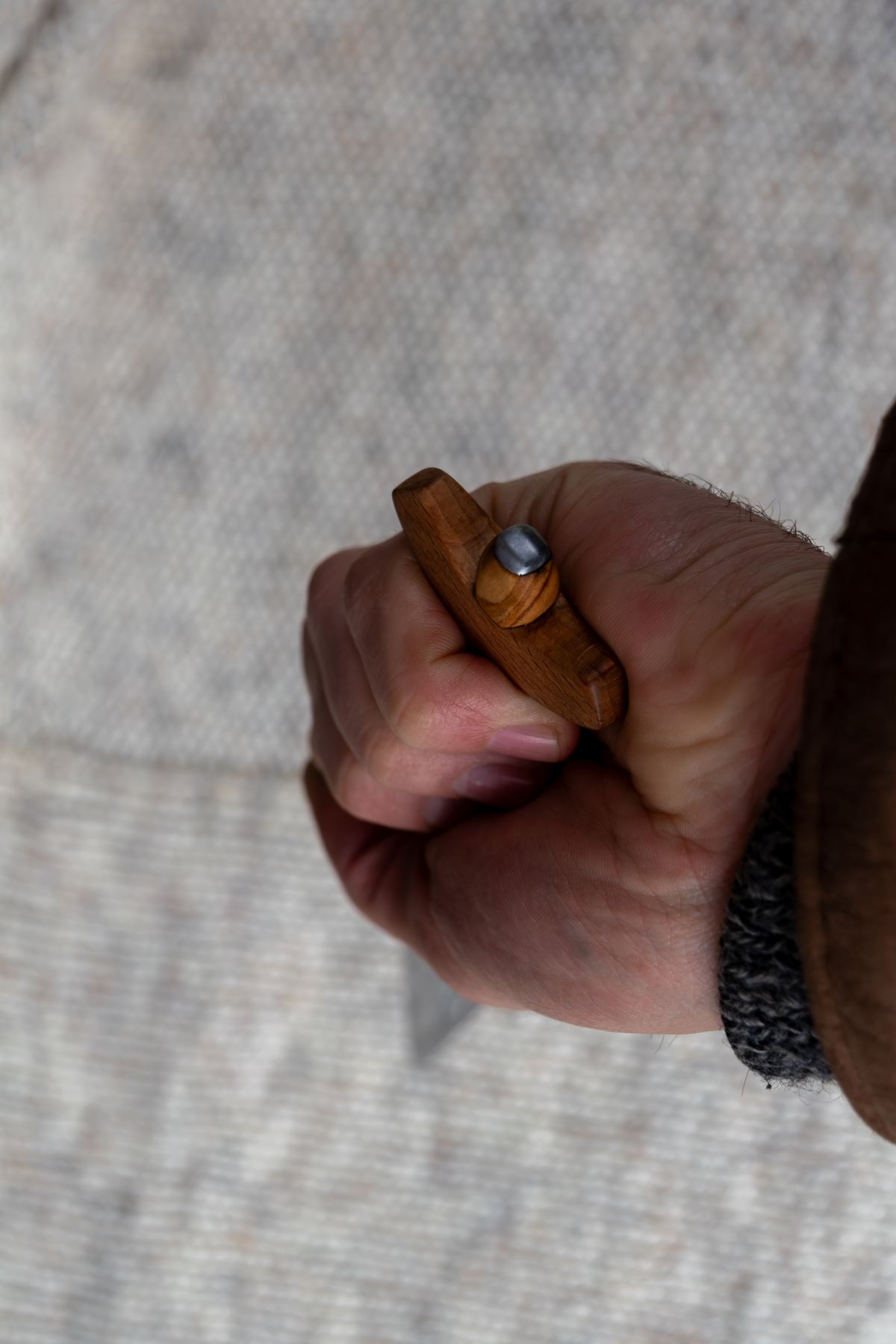
The shape of the guard, the pommel and the grip is reconstructed from traces of wood held in the corrosion products. The reconstruction proposed by A. Rapin runs the grain of the wood along the curved form of the guard and pommel, like a branch that had been bent. His study drawing of the object suggests instead that the grain ran horizontally, which is what I have followed in my reproduction.
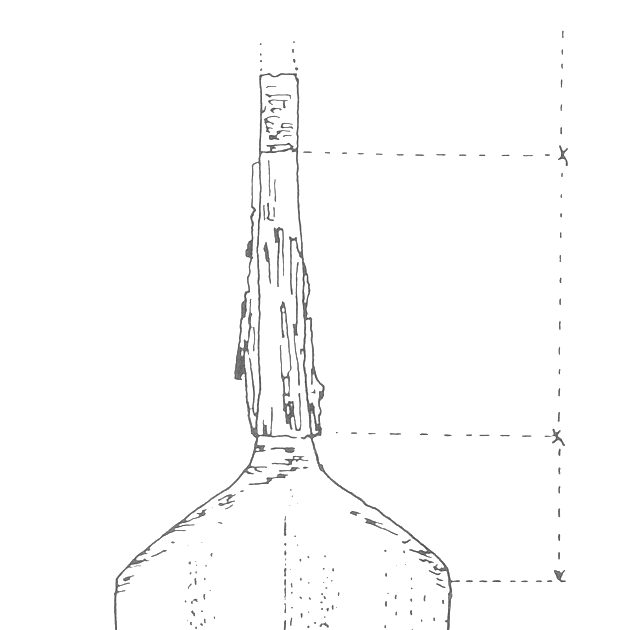
The whole echoes other anthropomorphic grips in wood or bronze from the same period. It is possible that the object was far more figurative than my reproduction, which is sober enough by comparison.
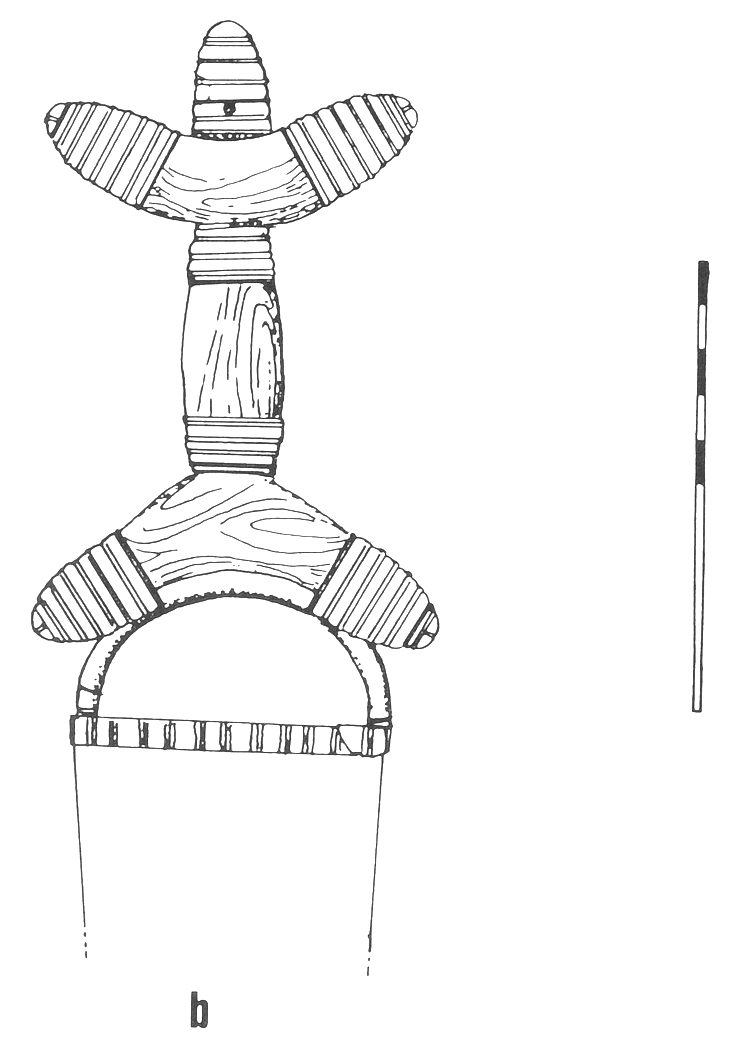
I respected the direction of the fibres, but chose the woods myself, for their pronounced grain : beech and olive. Both are plausible species, present in the environment at the time, but not attested on this object, since no xylological study was carried out.
I kept the dimensions of the grip close to those of the original, as it is already very short. I also gave the pommel and guard a slightly tapered form, to bring the shapes into keeping with one another.
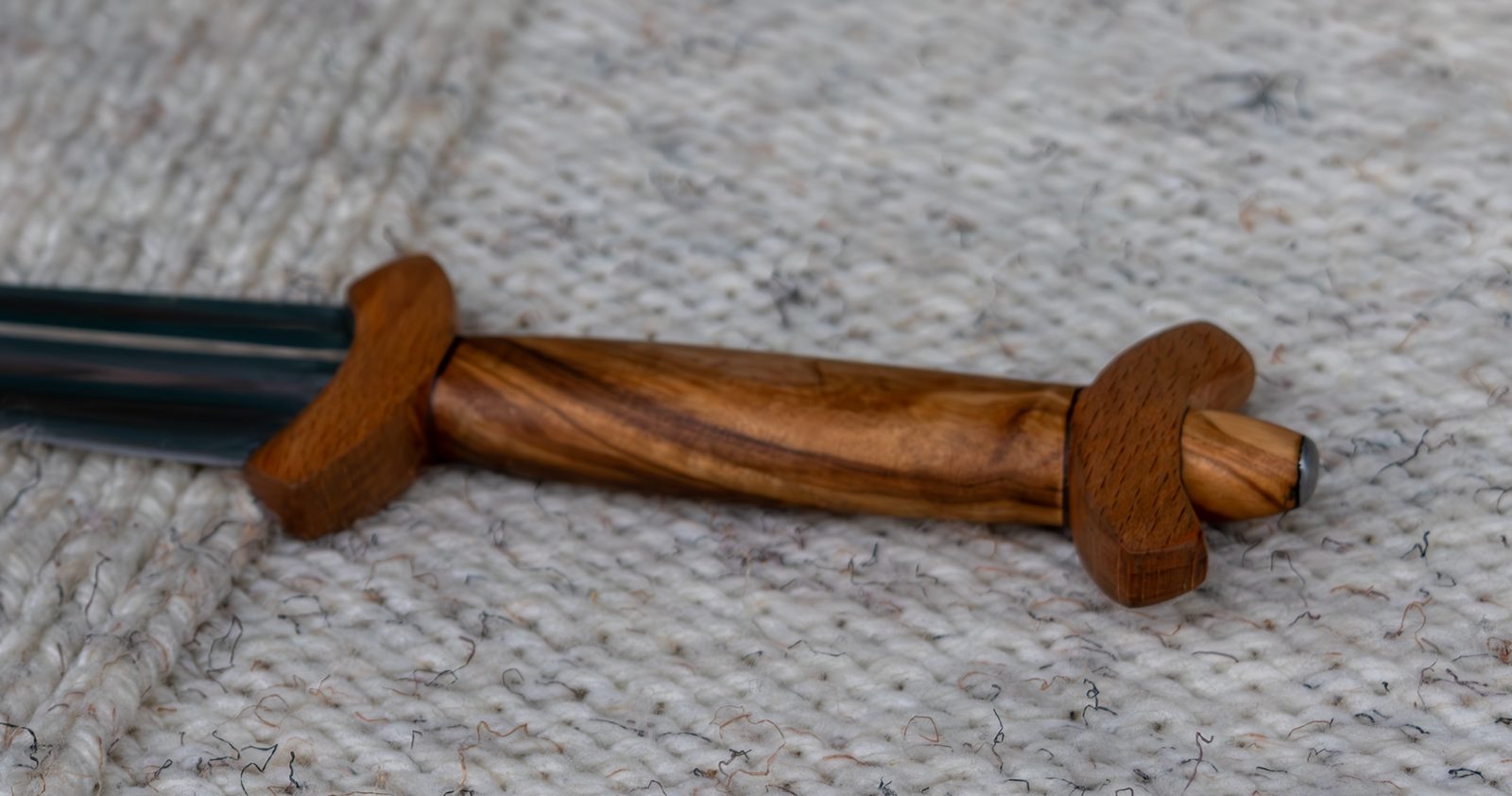
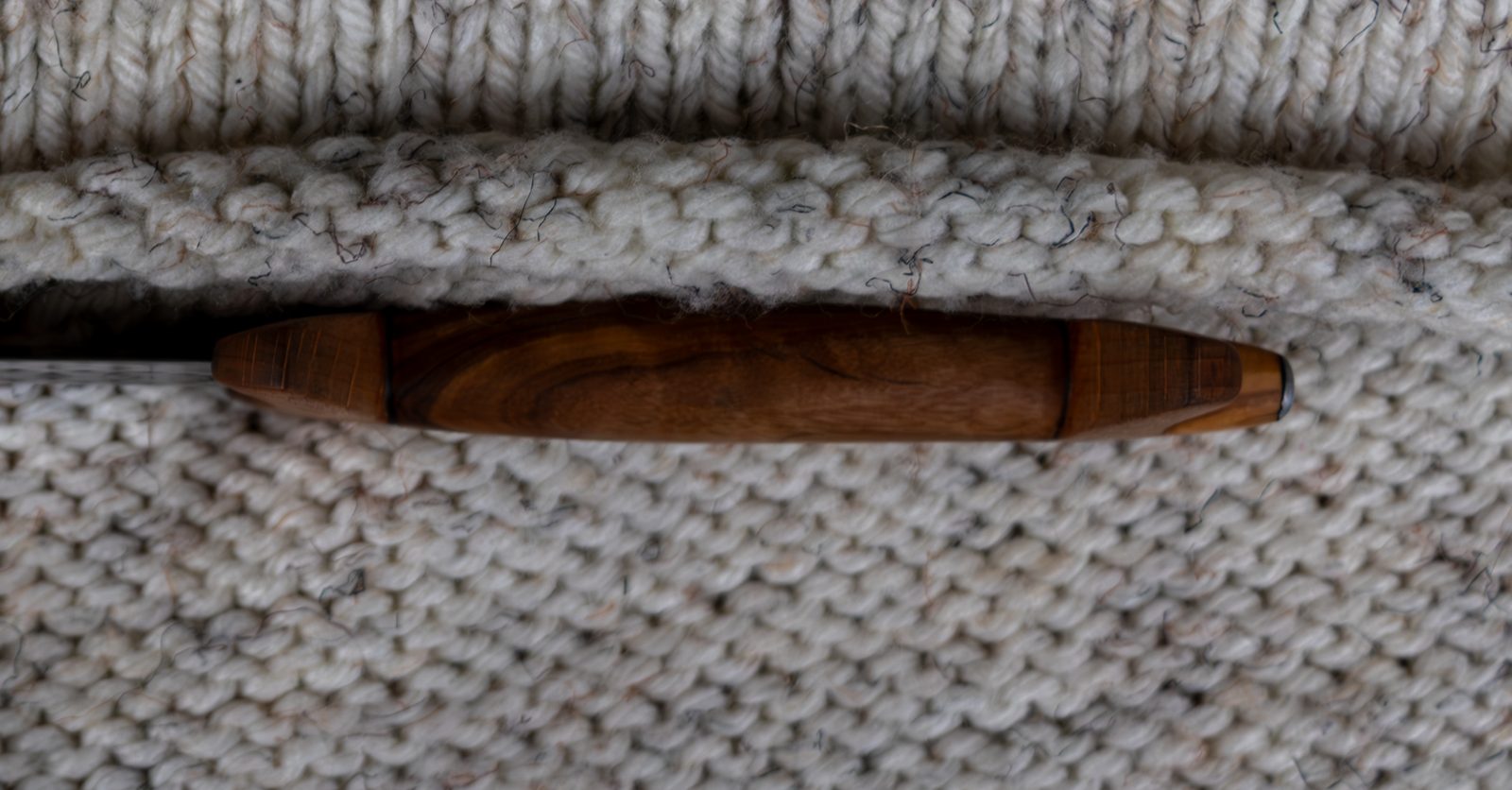
The blade, in modern carbon steel, is forged by hand. The steel was hardened, tempered to straw yellow and satin-finished.
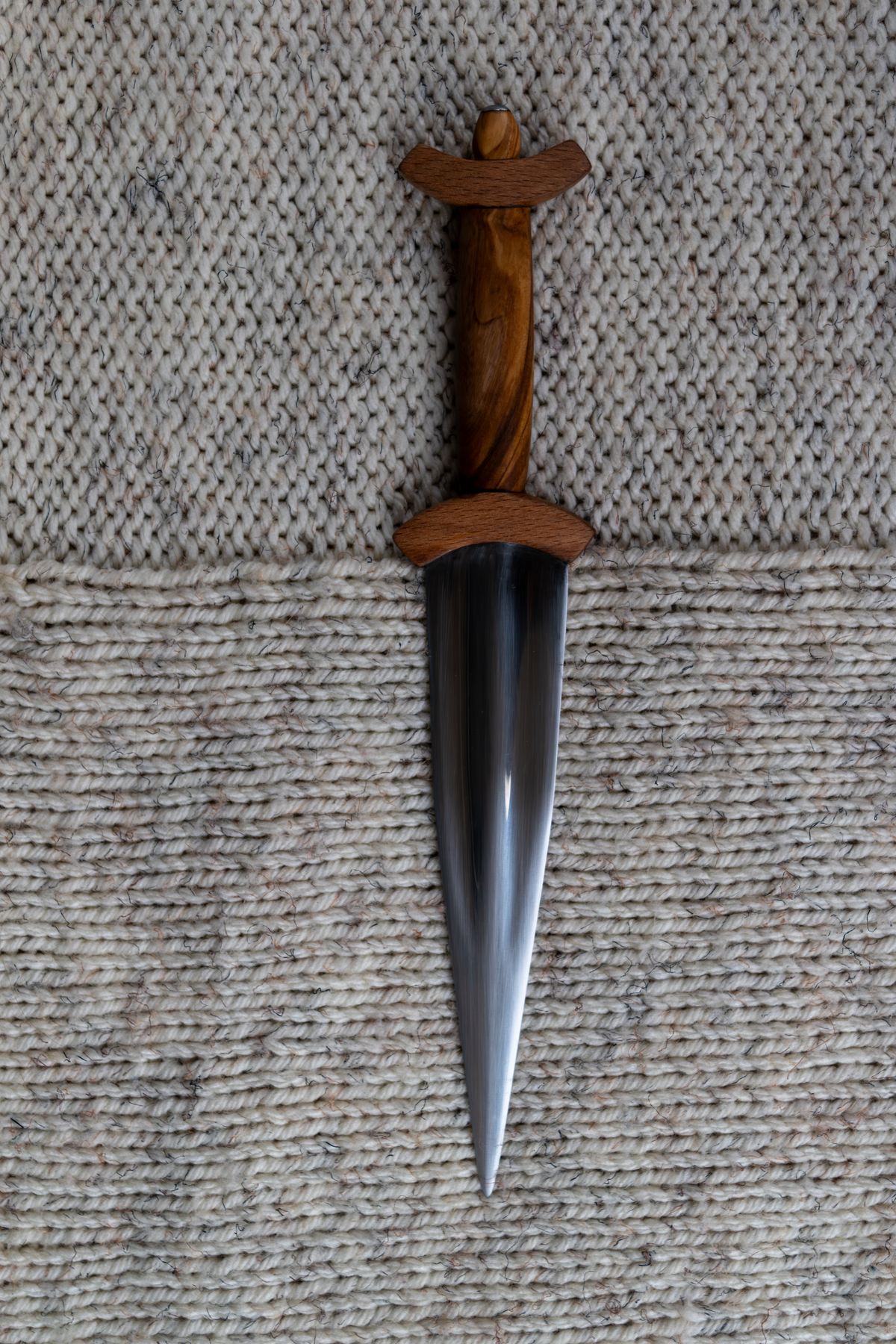
This is a weapon for which it is hard to imagine any hold other than the so-called « hammer » grip, so constrained is the hand by the narrowness of the grip. In return, that complicates cutting work (striking with the edge), which asks for more freedom of movement around the grip. It is, on the other hand, an advantageous position for the thrust (striking with the point), particularly at miniature scale.
The scabbard, the suspension fittings and the belt are complex, made up of many bronze pieces. I hope one day to reproduce them, perhaps alongside a full-scale reproduction of the object.